
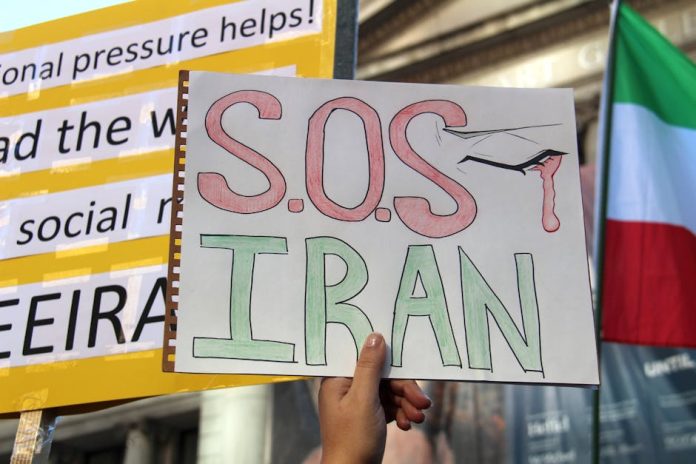

Trump’s Bold Claim and Iran’s Skepticism
The U.S. administration’s approach to the Iran crisis has been marked by a mix of diplomatic overtures and military posturing. Trump’s recent statements align with his broader policy of pressuring Iran through economic sanctions and military threats, rather than pursuing a comprehensive agreement. Critics argue that this strategy risks further destabilizing the region, as it leaves Iran with little incentive to negotiate. Araghchi’s skepticism, meanwhile, reflects Iran’s long-standing view that U.S. intentions are driven by self-interest rather than genuine diplomacy. The Iranian leader’s remarks also highlight the nation’s determination to resist external pressure, even as its economy faces severe sanctions.
The potential for a U.S. withdrawal without a deal raises significant questions about the future of the conflict. If Trump’s timeline proves accurate, the abrupt end of hostilities could leave unresolved issues, such as Iran’s nuclear activities and its support for regional militant groups. However, such a move might also reduce the risk of a full-scale war, which has been a growing concern for both sides. The international community, including key allies like European nations and Gulf states, has expressed concern over the instability this scenario could create. Meanwhile, Iran’s leaders have warned that any U.S. withdrawal would be met with a “resolute response,” emphasizing their readiness to escalate tensions if necessary.
Escalating Attacks in Iran and the Human Toll
The attacks on Isfahan and Farokhshahr are part of a pattern of Israeli military operations that have intensified in recent months. These strikes are believed to be aimed at weakening Iran’s ability to sustain its nuclear program and its support for groups like Hezbollah and Hamas. However, the targeting of industrial facilities has raised concerns about the humanitarian impact, as these sites often employ thousands of workers and serve as vital economic hubs. Iranian officials have emphasized that the attacks are not only damaging to the economy but also a direct threat to the livelihoods of ordinary citizens. The Iranian government has called for an immediate halt to such operations, warning that further aggression could lead to a “full-scale war” with devastating consequences for the region.
The international community has expressed mixed reactions to the escalating violence. While some countries have criticized Israel for its actions, others have remained silent, citing the complexity of the regional security situation. European nations, in particular, have called for restraint and dialogue, arguing that military escalation could lead to catastrophic outcomes. Meanwhile, Iran has sought to rally support from its allies in the Middle East, including Syria and Iraq, to counter what it perceives as a U.S.-backed Israeli campaign. The continued attacks have also raised questions about the effectiveness of military strategies in achieving long-term political goals, as the conflict appears to be entering a new phase of unpredictability.
Israeli Military Actions in Lebanon and Regional Fallout
The Israeli military’s focus on southern Lebanon has drawn comparisons to past operations, including the 2006 Lebanon War, which resulted in significant civilian casualties and widespread destruction. Critics argue that the current strategy could lead to a prolonged conflict with severe humanitarian consequences, including the displacement of thousands of civilians. The Israeli government has maintained that its actions are proportionate and aimed at neutralizing threats, but human rights organizations have raised concerns about the lack of accountability for civilian casualties. The situation has also raised questions about the effectiveness of military force in achieving political objectives, as the conflict continues to deepen divisions within Lebanon and the broader Middle East.
The international response to Israel’s actions in Lebanon has been divided. While some nations have condemned the measures as disproportionate, others have called for a more nuanced approach that balances security concerns with humanitarian considerations. The United Nations has urged both sides to exercise restraint, emphasizing the need for dialogue to resolve the crisis. However, the lack of progress in diplomatic efforts has left many observers skeptical about the possibility of a peaceful resolution. The continued escalation of violence has also raised concerns about the potential for a wider regional conflict, as tensions between Iran and Israel threaten to spill over into neighboring countries.
CONCLUSION
The situation in the Middle East remains fraught with uncertainty, as the potential for a U.S. withdrawal from the Iran war without a deal, combined with ongoing military actions in Iran and Lebanon, continues to escalate tensions. Trump’s bold claim about ending the conflict within weeks has added a new layer of unpredictability to an already volatile situation, while Iran’s skepticism of diplomatic talks highlights the deepening mistrust between the two nations. The Israeli attacks on Iranian infrastructure and Lebanese civilians have further complicated the geopolitical landscape, raising concerns about the humanitarian impact and the risk of a broader regional conflict. As the situation unfolds, the need for a balanced approach that prioritizes diplomacy over military confrontation has never been more urgent. The international community must remain vigilant in its efforts to prevent further destabilization, ensuring that the pursuit of security does not come at the cost of global stability.
See related coverage: How Emma Russo Became Known for Owning a Talking Pet Raven